


I last reviewed the Ethiopian restaurant Queen of Sheba, 2308 N. MacArthur Blvd., for the Lost Ogle around 10 years ago. Since then, I have been a frequent customer of the eatery, usually by myself, usually in the dark corner, always enjoying their authentic African delicacies.
Sadly, Queen of Sheba is the type of restaurant most people will try once, but after the curiosity is sated and the hunger is vanquished, they move on to other, more familiar, things like Big Macs, Baconators, and Whoppers.
So, there I would sit alone, sopping up the remnants of my meal with the last of my spongy injera "bread" in hand, quietly weeping and with one more bite left.

Last week though, something wonderful happened… I found some friends that hadn’t been to Queen of Sheba yet, and as the instigator of many outré meals, I invited them both, along with my loving wife, to come along with me to re-try this unique foodstuff.
We met TLO cohort Beth and her daughter—both Queen of Sheba and Ethiopian cuisine newbies—at around five o’clock in the PM.

Walking into Queen of Sheba—hey, their lattice frontage is gone!—immediately the smells of simmering spices, smoldering sauces, and the most delectable stews were permeating the surrounding atmosphere and, of course, I fell in love with it all over again.
Finding a table and completing introductions, we summarily looked over the whole menu, but I already knew what I wanted. Taking the lead role of ordering for the table, I made some suggestions that, thankfully, my guests abided by.

As we sipped our various drinks, I had my favorite beverage from Queen of Sheba, the Korani ($5.50), or the Ethiopian spiced hot tea with a sneaky splash of Ouzo. That aperitif really got me in the mood for our starter, the egalitarian Vegetarian Sambusas (two orders, two for $6.99).

Thin dough shells are stuffed with a hearty blend of meatless magic featuring lentils, green chili, onions, and different herbs, and then fried in vegetable oil. They are hearty, crispy, and always a great appetizer, but I could have them any time of day.
My wife wanted to try the Ethiopian Potato Salad ($9.99). Being one for any form of potato salad, this variation was new to me as well.

The dish had diced potatoes, green chili, and onion, all in Queen of Sheba’s very own house dressing. And while it’s a different kind of potato salad, it is a stunning one, as the green chilis make this dish so good, giving it a slight burn that is so pleasurable.
Before the main dishes arrived, our waiter brought out the backbone of most Ethiopian cuisine: injera, the fermented, pancake-like flatbread with a slightly spongy texture, traditionally made from teff flour.

In a way, the injera is an edible utensil, traditionally used to move meals from plate to mouth. Usually, one places the stewed vegetables or meats on the injera, giving it a real "burrito" vibe that I truly like. Beth skipped the fork entirely, scooping everything up with injera in hand.
Thankfully, Queen of Sheba gave us a whole plate.
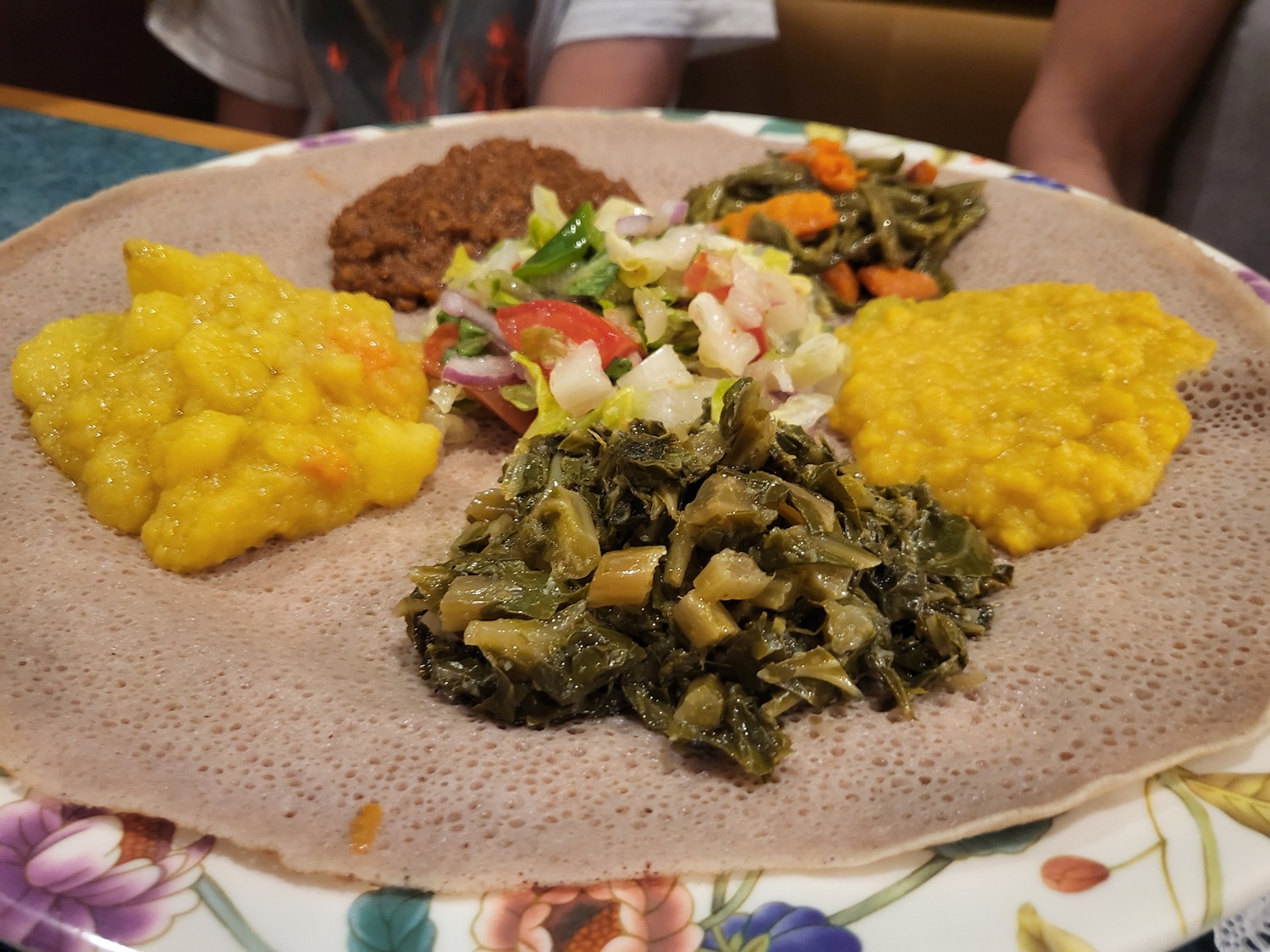
For our mains, we ordered similar but different entrees, starting with Beth's order of the Vegetarian Platter ($21.99). Chock full of Sheba's veggie tastes, it had green beans, stewed yellow split peas, collard greens, lentils, potatoes and carrots, and a salad.

Now, to be fair, I didn’t partake in this platter, so I asked Beth to give me the report from the vegetarian front. The lentil scoops were her favorite of the samplings—well seasoned and earthy, with a flavor that set them apart from the Indian dal they vaguely resembled. She also enjoyed the collard greens and salad just fine, but “did not love the green beans.”
My platter went in the other direction: the Queen of Sheba Messob ($25.99), a sampler plate to end all sampler plates, giving all the carnivores something to enjoy.
It had a “dazzling array” of beef, sauced chicken, and beef alicha—a mildly spiced stew with turmeric and aromatic spices—as well as vegetarian dishes including a blend of potatoes and carrots, stir-fried green beans, lentils, chickpeas, and a small salad.

While the beefy but loose Tibbs and the on-the-bone Yedero Watt chicken are deft standouts, it’s the beef Alicha that I always come back for. That extra-lean chopped beef, simmered in a mild and flavorful onion and herb sauce, it's got a real earthy taste that I crave.
As for the vegetable sides on my platter, I have always thought these concoctions were otherworldly. Between the stir-fried green beans with their vinegary zip and the crisp salad’s direct taste, they make it feel like a full meal.
I was loading my fork with another hefty helping of lentils and chickpeas when I noticed my wife and Beth deep in conversation about growing up as Catholic schoolgirls—at one point comparing notes on corporal punishment and recovery.
As the discussion drifted, I downed the remaining legumes and was glad that, finally, I had two more converts to Queen of Sheba (though Beth’s pre-teen daughter might need a little more encouragement).
Maybe next time I will get them to try the fried injera Qutenga, lightly buttered and spiced to perfection, perhaps the chopped collard greens of the Gomen Watt—or I could tempt the table with the Assa Tibbs, or fried fish seasoned with Queen of Sheba's special spices.
Every time I visit Queen of Sheba, I find some new astounding flavor to tuck into that delicious injera. Thankfully, now my friends will too. So tear off a piece and get to eating!
Cómpralo ya!
-
Follow Louis Fowler on Instagram at @louisfowler78.


